
Vineland Root Zone Calculation for TPZ Fencing Compliance
In Vineland, NJ—home to historic neighborhoods like Landis Park and Downtown Vineland along The Ave—accurate Critical Root Zone (CRZ) calculation is essential when installing temporary protective fencing around trees. Union Lake Fence Rentals provides precise TPZ fencing solutions that meet municipal arborist requirements, accounting for Vineland’s pre-1920 urban canopy and sandy loam soils common near Menantico Ponds Wildlife Management Area.
Root Zone Calculation for TPZ Fencing in Vineland
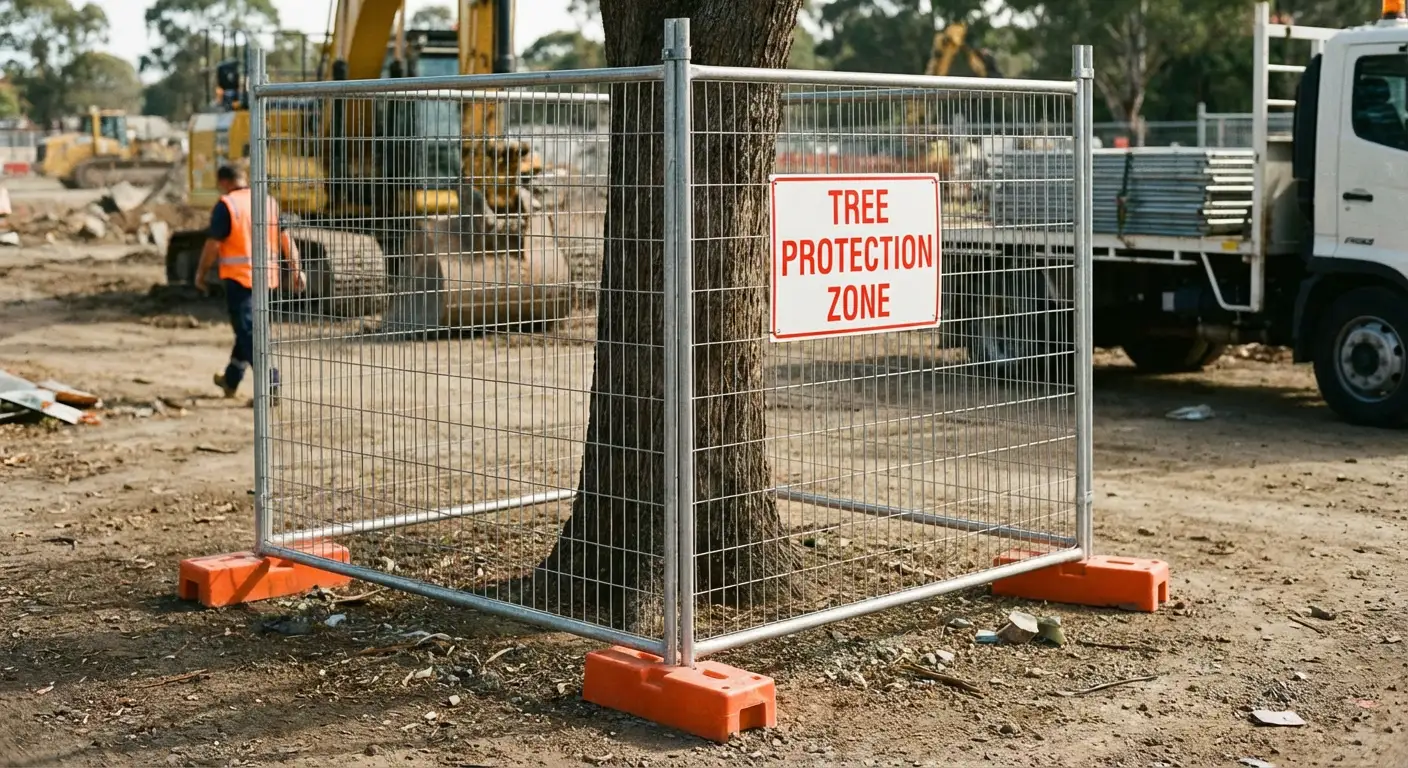
- We size the protected area first, then place tree protection zone rentals around it.
- We use concrete steel bases when the ground won’t hold a light setup.
- We shift with modular reconfiguration if the arborist or inspector asks for a wider buffer.
Calculation Steps
- tree protection ordinances set the baseline for TPZ layout and fencing placement in Vineland
- tree protection zone rentals help us size the fenced root area before the crew touches grade
- concrete steel bases keep TPZ panels steady on uneven old-site ground
- modular reconfiguration lets us follow the calculated root zone as site conditions change
- wind load resistance matters when a TPZ line sits out in open, storm-prone lots
| Calculation step | What we check on site | Why it matters |
|---|---|---|
| Trunk and canopy review | Measure the tree and read the spread before placing panels | Sets the TPZ radius around the root system |
| Ground condition check | Look for soft soil, pavement edges, and old-site disturbance | Helps us choose the right base and panel layout |
| Code and access review | Match the layout to local tree protection rules and job access needs | Keeps the fence compliant while leaving room for crew movement |
Calculating Root Protection Zones in Vineland
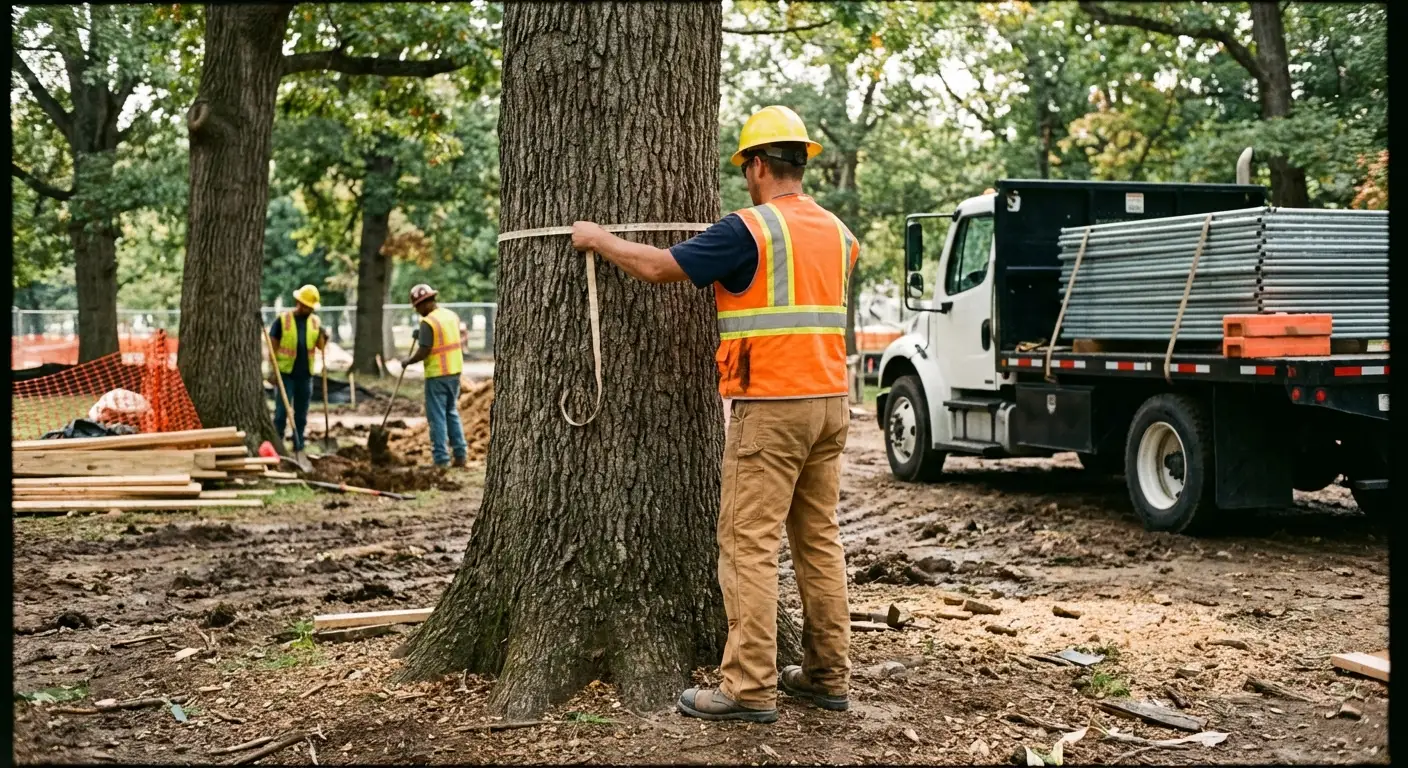
Root zone calculations for TPZ fencing in Vineland follow the canopy drip line method. For pre-1920 buildings near The Ave, add 18" beyond the drip line to account for historic root systems. Near Roosevelt Boulevard's mature oaks, use 1.5 times the drip line radius. Always verify with local ordinances before installing near Vineland High School North. The calculation includes three steps: measure trunk diameter, map the drip line, then add equipment buffers per OSHA standards.
Key Terminology
- TPZ
- Protected area around tree roots
- Drip line
- Perimeter of tree's canopy
- Compaction zone
- Area requiring soil protection
- Critical root zone
- Vital root area for tree health
- Root flare
- Base where trunk meets roots
- Vineland ordinance
- Local tree protection regulations
In Simple Terms
Measure from trunk to drip line, then add buffer for equipment access.
Root Zone Calculation for TPZ Fencing: Compliance Guide
Guidelines for calculating root zones ensure TPZ fencing compliance in Vineland, NJ neighborhoods.
| Root Zone Depth | Typically calculated at 24 to 36 inches below ground level |
|---|---|
| Fence Post Spacing | Standard spacing of 6 to 8 feet to maintain structural integrity |
| Soil Type Assessment | Evaluate soil composition in Vineland, NJ for load-bearing capacity |
| Load Distribution | Ensure even load distribution to prevent post sinking or shifting |
| Compliance Standards | Conform to OSHA and local Vineland municipal regulations for temporary fencing |
| Installation Cost Range | $350-$450 per 100 linear feet including root zone preparation |
| Signage Interval | Every 30 linear feet |
TPZ Fencing Compliance Support
Contact Union Lake Fence Rentals in Vineland for root zone calculations.
Common Mistakes in Root Zone Calculation for TPZ Fencing
Root zone calculation for TPZ fencing requires precise measurements to protect trees and comply with regulations. Mistakes here risk tree health, project delays, and code violations in Vineland’s varied neighborhoods.
Ignoring Tree Species and Root Spread Variability
Misjudging root zones based on tree type leads to insufficient protection, risking tree damage and regulatory fines during construction near sites like Cumberland Mall.
Consult arborist guidelines to tailor root zone calculations for specific species common in Vineland neighborhoods.
Using Inaccurate Site Measurements
Failing to measure distances from trunk base precisely causes fencing to encroach on protected roots, which may halt work until corrections are made.
Use calibrated tools and double-check distances when marking TPZ boundaries, especially in areas like Landis Park.
Overlooking Soil and Terrain Conditions
Neglecting soil compaction or slope effects can underestimate root zone size, compromising tree stability and safety on site.
Assess soil type and terrain before finalizing TPZ fencing layouts to ensure full root protection in neighborhoods such as North Vineland.
Failing to Account for Construction Activity Impact
Placing fencing without considering heavy equipment paths risks root damage and delays project progress in busy corridors like Chestnut Avenue.
Plan fencing zones factoring in expected machinery movement and restrict access to sensitive root areas.
Neglecting Local Compliance and Ordinances
Ignoring Vineland tree protection rules can result in citations, fines, and forced removal of improperly fenced TPZs.
Review city ordinances and incorporate local guidelines into root zone calculations for all TPZ fencing projects.
Root Zone Calculation for TPZ Fencing: Compliance Guide — Part 2
We get it up fast, so you can get back to work—but never at the cost of tree health or code compliance. Since 2008, Union Lake Fence Rentals has treated every temporary perimeter as both a safety barrier and a stewardship line. Our crew measures twice, references Vineland’s ordinances, and positions every panel to honor the living infrastructure beneath the soil.
-
Measure from the Trunk, Not the Canopy
Vineland’s tree protection ordinances require root zone buffers based on trunk diameter at breast height (DBH), not the spread of branches. We calculate the critical root zone using 1.5 feet per inch of DBH to ensure compliance with local standards.In PracticeA 12-inch DBH oak near Roosevelt Boulevard needs an 18-foot radius buffer—our TPZ fencing respects that boundary without guesswork.
-
Anchor Outside the Drip Line
Temporary fence bases must sit beyond the tree’s drip line to avoid soil compaction over sensitive feeder roots. In Landis Park’s older groves, we use concrete-steel bases placed deliberately outside this zone.In PracticeFor pre-1920 elms near Downtown Vineland (The Ave), we set bases 22 feet from the trunk—well past the drip edge.
-
Minimize Ground Penetration
Driving posts inside the root zone violates Vineland’s guidelines. Instead, we deploy post-driven fence only beyond the calculated buffer, using wheel-assisted gates for access without trenching.In PracticeAt the Vineland Produce Auction site, we avoided post-driving within 15 feet of a mature pecan’s base.
-
Account for Soil Type and Slope
Sandy loam soils common in North Vineland drain quickly but offer less root anchorage. We adjust base spacing and use wind-load resistance features to prevent leaning that could encroach on protected zones.In PracticeOn a sloped lot in Roosevelt Boulevard, we doubled base weight to maintain fence position after heavy rain.
We align every TPZ installation with Vineland’s tree protection standards, using field-verified root zone math—not estimates.
TPZ Fencing Compliance in Vineland: Field-Tested Answers
Practical TPZ fencing solutions for Vineland's historic neighborhoods and protected areas.
What defines the Tree Protection Zone (TPZ) in North Vineland?
The TPZ radius equals 1.5 feet per inch of tree diameter, measured at chest height. Vineland requires this for pre-1920 oaks near Landis Park.
How does Menantico Ponds Wildlife Management Area affect TPZ rules?
Proximity to Menantico Ponds triggers additional buffer requirements under NJDEP regulations. Fencing must avoid disrupting wetland drainage patterns.
Are TPZ calculations different for Downtown Vineland construction?
The Ave's narrow rights-of-way allow reduced TPZ radii if arborists document root confinement by pavement. Submit forms to Vineland Zoning Board.
What fencing materials comply with Vineland's TPZ standards?
Union Lake Fence Rentals uses permeable mesh barriers meeting ASTM F2453. Solid panels require ventilation gaps per Vineland Urban Forestry Division specs.
How are mature trees handled during TPZ fence installation?
Hand-digging is required within 3 feet of pre-1920 specimen trees. Air-spade verification precedes any drilling near Landis Park properties.
Does TPZ fencing need inspection in residential North Vineland?
Vineland Code Enforcement checks TPZ barriers after installation. Missing signage or grade changes over 6 inches fail inspection on The Ave projects.
TPZ Fencing Root Zone Compliance Calculations
Request precise root zone measurements for Tree Protection Zone fencing installation projects throughout the Vineland, NJ area.
Serving commercial construction sites in Vineland, New Jersey